Fiedler Audio’s Mastering Console is a standalone application for mastering Dolby Atmos ADM/BWF files. Version 2 brings an album-oriented workflow with timeline editing and crossfades, and lets you work on stereo masters alongside the Atmos versions.
Dolby Atmos Composer is the tool I use for Atmos creation. I’m still exploring the Mastering Console’s features. The ability to use familiar VST3 tools on the stereo versions is particularly interesting to me, while the Atmos processing follows its own OBAM workflow.
Start with the mix you intend to deliver
Import an ADM/BWF mix, check its metadata and choose the monitoring format before making processing decisions. Keep a copy of the original mix so you can compare the result and return to the source when needed.
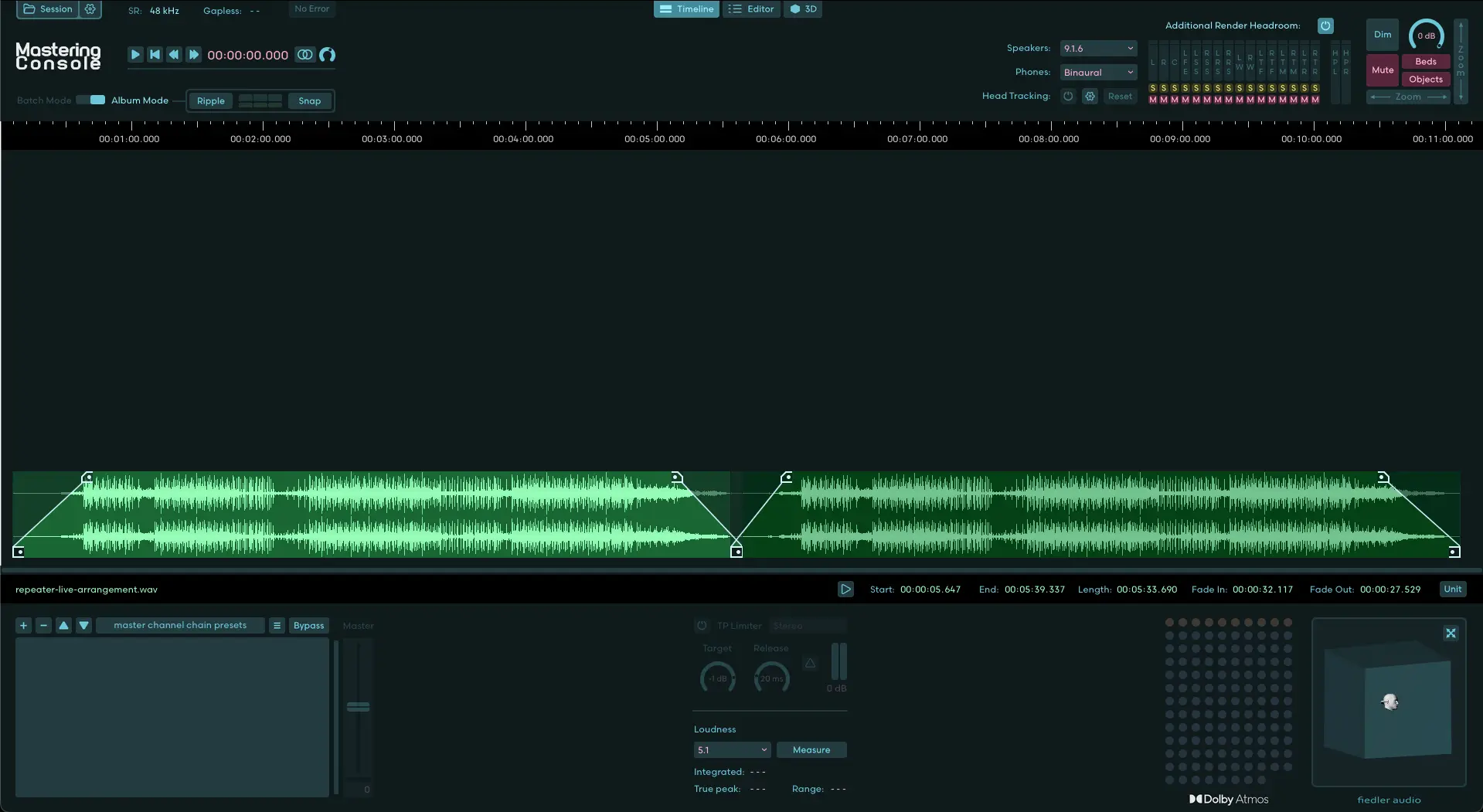
For an album, listen to the transitions as carefully as the individual tracks. A change in level, the decay of the final sound or the timing of the next entrance can affect the sequence. Use the timeline to judge the album as a continuous listening experience.
Set the audio device and output routing
Open the setup controls and select your audio device. Match its sample rate to the session. The Console supports 48 kHz and 96 kHz Atmos sessions, but those ADM/BWF sample rates cannot be mixed within one session.
Choose the output layout that matches the speakers you actually have connected. Check the mapping before listening at normal level, and save a routing preset once it is correct. A familiar test file can help you confirm that the signal reaches the intended outputs.
Monitor on speakers and headphones
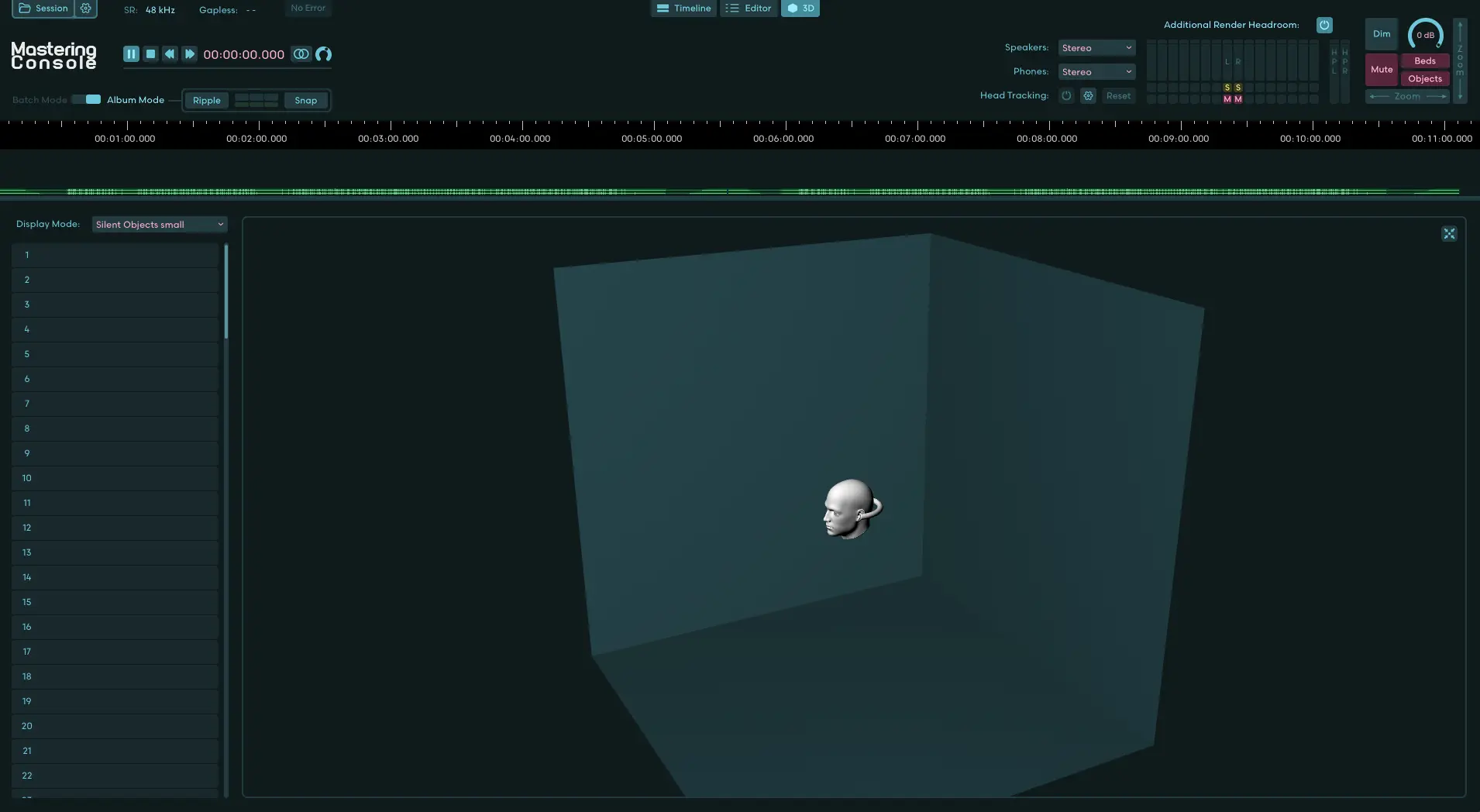
The Console provides separate speaker and headphone monitoring paths. Monitoring options include binaural and speaker layouts up to 9.1.6. Select the appropriate render format when comparing the mix on different systems.
Use a consistent listening level when comparing versions. A louder pass can seem more impressive even when the processing is not helping. Listen for balance, image stability and whether quieter details survive the change of playback format.
Speaker calibration and room tuning
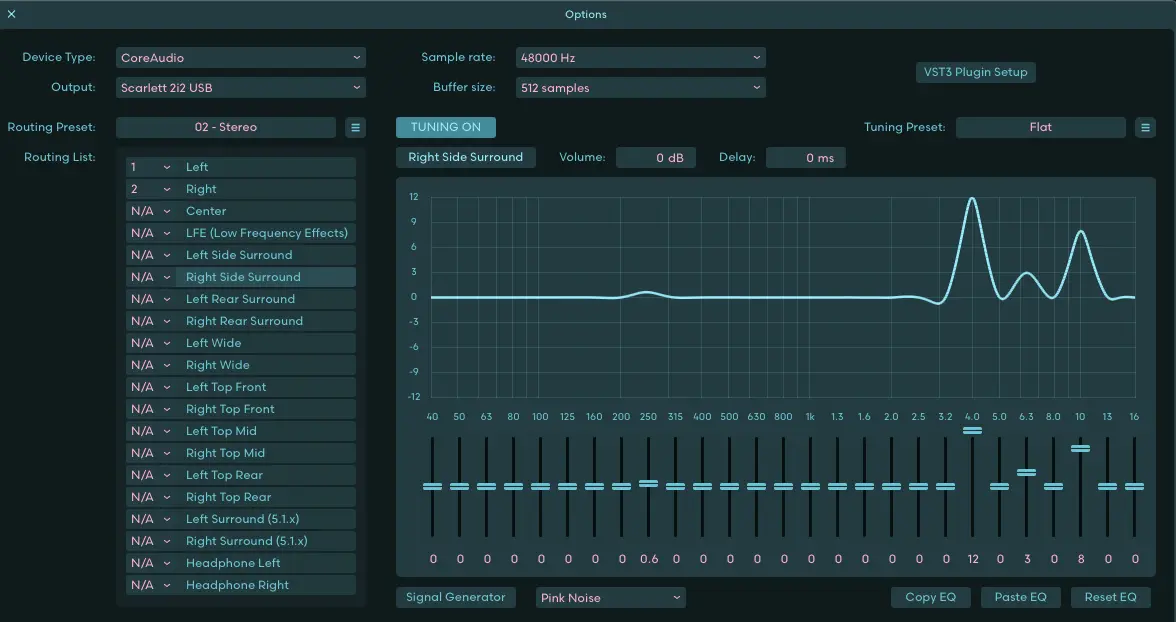
The Tuning section offers level, delay and EQ for speaker channels. Its signal generator provides test signals for calibration. Measuring the room and generating impulse responses require additional equipment and software.
Confirm speaker positions and routing first. Then use measurements to guide level alignment, distance compensation and EQ decisions. Save a preset for the room so the monitoring setup can be recalled without rebuilding it for each session.
Treat calibration as part of the listening environment. Keep those adjustments separate from the decisions you make about the musical balance of the master. After changing the setup, listen to reference material you know well before judging a new mix.
OBAM processing and stereo VST3 plug-ins
Atmos master processing uses OBAM plug-ins. VST3 hosting is for the stereo mixes. A familiar stereo plug-in therefore does not automatically become a processor for the full Atmos master. Gravitas MDS is a separate product whose licence must be accounted for when using it.
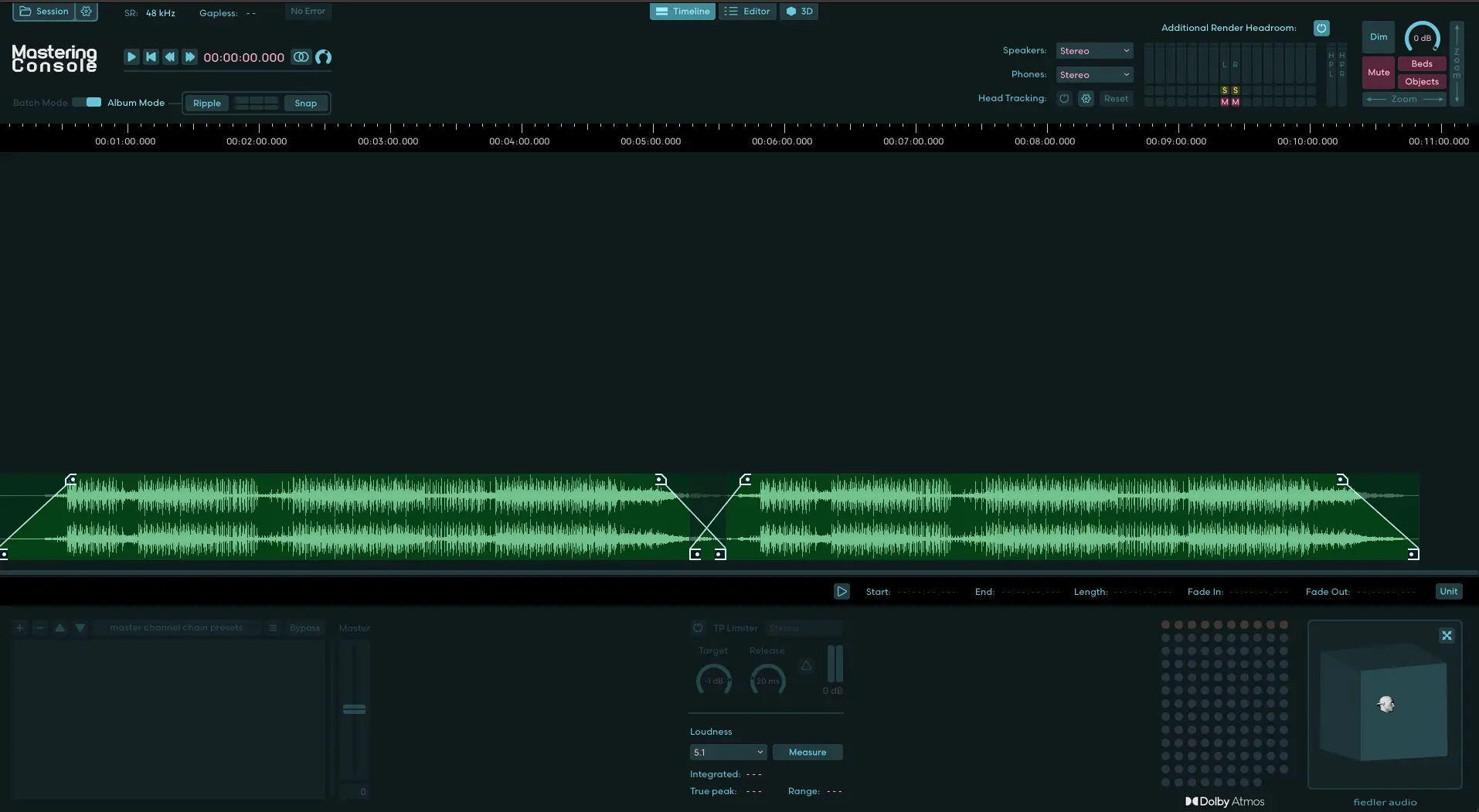
Begin with the unprocessed mix and decide what needs attention. Add processing with a clear purpose, then compare at a matched listening level. If a problem belongs to an individual sound or its placement, return to the mix rather than trying to solve everything at the mastering stage.
Loudness, peaks and export
The application includes loudness measurement, gain correction and a True Peak limiter, and can export Atmos ADM/BWF, re-renders and stereo versions. Choose the required deliverables for the project and check the receiving service’s current specification.
Measure the complete programme and listen to the exported files. Check transitions, fades and quieter passages as well as the loudest section. A meter reading is one part of the check, and the exported result is what the listener will hear.
Where it fits in my workflow
The appeal is having a dedicated place to evaluate the finished mix and its deliverables. For my own setup, the next useful test is to take a familiar Atmos mix through the process and compare it with its stereo counterpart.
If you are starting with Atmos creation, see the Dolby Atmos Composer Essential guide. For the Console’s exact controls and setup, use the official user manual. The Fiedler Audio product page has current compatibility, trial and licence information.