I used Emagic Logic back in the Atari days, running it side by side with Steinberg Cubase. That was a while ago.
From Atari I moved to PC, stayed with Cubase for years, and eventually landed in Ableton Live and Cockos Reaper, where I’ve happily lived for a long time.
When I bought my current Mac Mini Pro M2, Apple threw in a gift card. Fair enough — I picked up Logic Pro X.
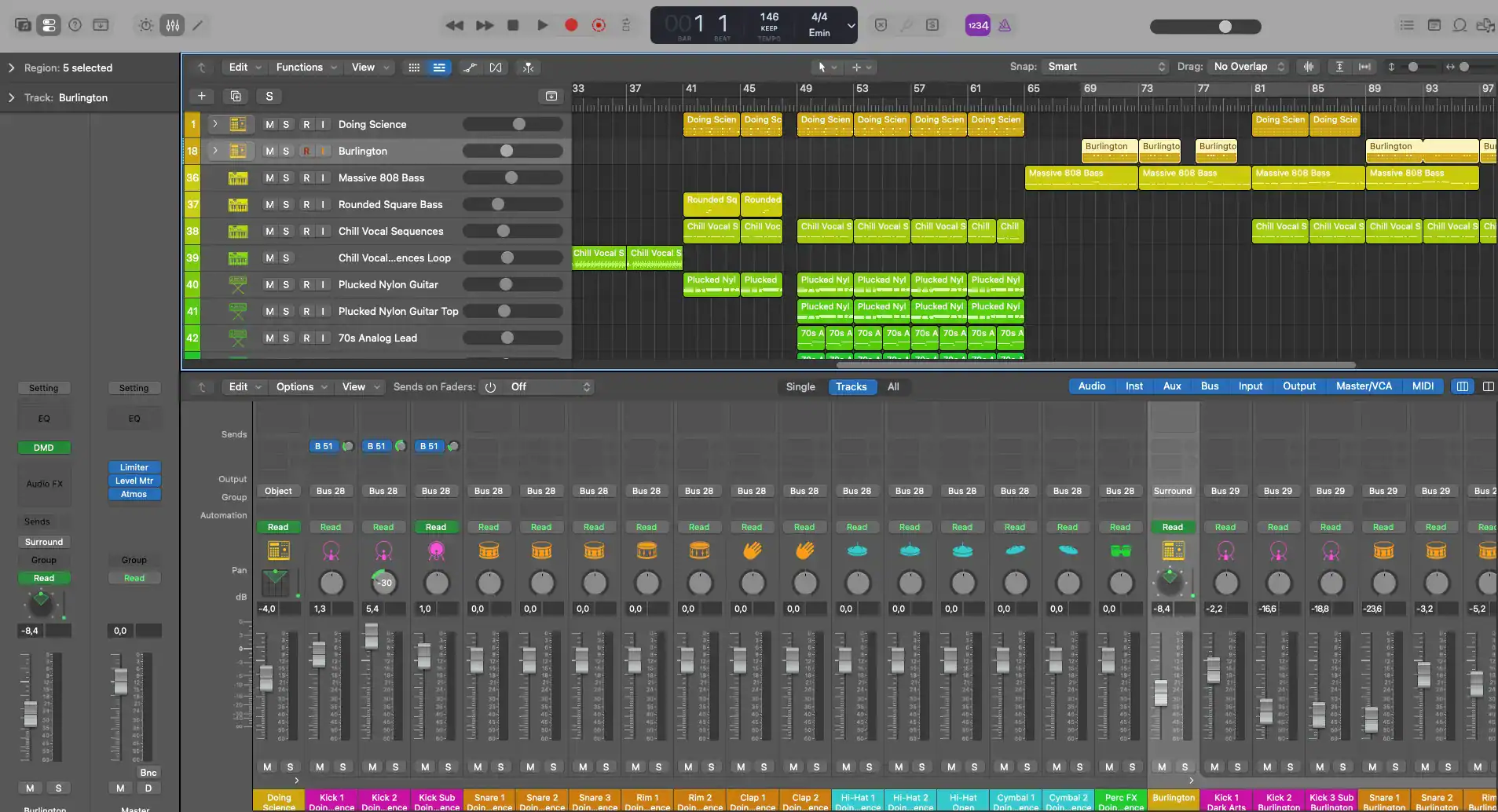
There’s a lot to like:
- Solid built-in synths
- A deep stock plugin collection
- Native Dolby Atmos support (still a big plus)
But… I never truly bonded with it.
The interface never clicked for me, and the workflow felt like something I had to adapt to, rather than something that adapted to me. And with Logic 12, that hasn’t really changed.
Yes, there are new features — but at its core, it’s still very much the same Logic.
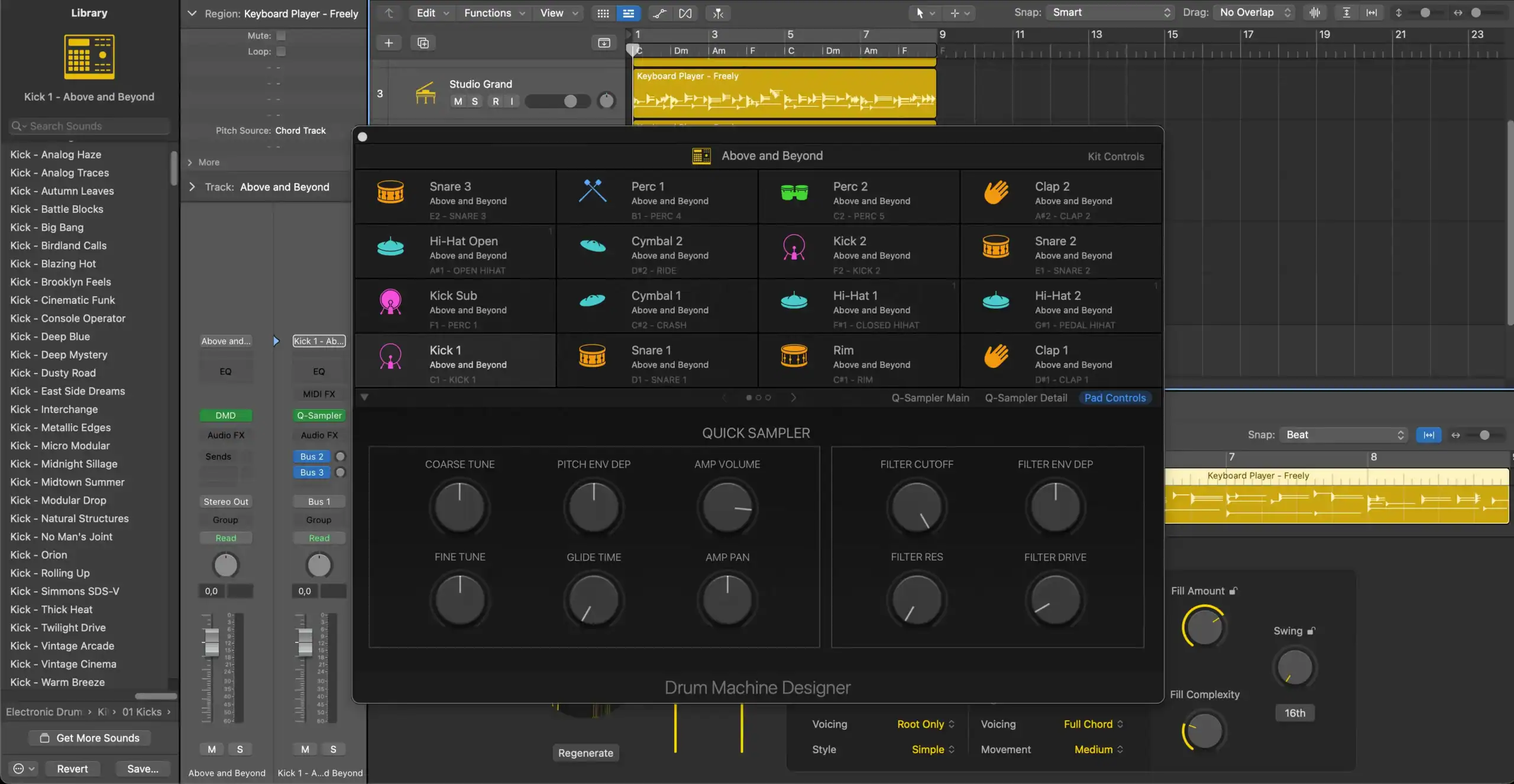
This update leans even harder into AI-driven and automatic tools, especially for generating MIDI parts, synth lines, and ideas. Useful for some. Not really what I’m looking for.
I prefer building things myself — slowly, deliberately, and with intent — rather than pressing a button and letting the DAW “suggest” my music.
What people are talking about (so far)
Around the forums, YouTube, and producer circles, the reactions are pretty consistent:
👍 The positives
- Apple continues to add value for money — Logic is still cheap for what you get
- AI tools are seen as helpful for beginners and fast sketching
- Atmos workflow keeps improving (especially for post and immersive audio)
😐 The mixed bag
- Power users feel the workflow is largely unchanged
- Long-standing feature requests are still missing
- Some feel Logic is becoming more of a music assistant than a musical instrument
👎 The criticism
- Heavy push toward automation instead of deeper editing control
- Interface still feels rigid compared to Live, Bitwig, or Reaper
- Advanced users feel slightly… ignored
Paid subscriptions, ownership… and the most expensive dongle
One thing quietly surfacing with Logic Pro 12 is a shift in how future updates may be handled.
Historically, Logic was the odd one out in the DAW world:
- Buy once
- Use forever
- Get years of feature updates at no extra cost
That model appears to be changing.
The signs point toward future feature updates being tied to a paid subscription, while the core version of Logic 12 remains usable without it. In practice, that likely means:
- Logic 12 will continue to work as-is
- Bug fixes and maintenance are included
- New features may require an ongoing payment
That alone would already be a philosophical shift — but Logic also comes with a built-in requirement that’s easy to forget:
You need a Mac.
Logic has always used the most expensive dongle in the business — Apple hardware.
That was easier to justify when Logic was a one-time purchase with long-term value. If Apple now adds a subscription layer on top of mandatory hardware, the value equation changes.
Not dramatically.
But noticeably.

It also reinforces something that’s always been true: choosing Logic isn’t just choosing a DAW. It’s buying into an ecosystem — hardware, operating system, update strategy, and now possibly subscriptions too.
My initial Thoughts
I understand why Apple is moving in this direction. Predictable revenue funds development.
I’m just not convinced it improves the relationship between tool and user — especially for producers who value ownership, flexibility, and long-term stability over constantly unlocked features.
My bottom line
Logic Pro 12 is not a bad DAW — far from it.
But it’s clearly heading in a direction where speed and automation matter more than hands-on control.
If Logic fits your brain, this update will probably feel fine.
If it never really did — this won’t change your mind.
For me, I’ll stick with tools that stay out of the way and let me do the thinking.
Similar tools worth looking at
If Logic doesn’t quite hit home, these are still strong alternatives:
- Ableton Live 12 – workflow first, creativity always
- Cockos Reaper – brutally efficient, endlessly customizable
- Bitwig Studio – modern modulation heaven
- Fender Studio Pro(Studio One) – traditional DAW with smart modern touches